
24/7 Emergency Response·Nationwide · average 2-hour response in main centres0800 222 379
Call 0800 222 379 — 24/7
Enviro Clean & RestorationGet In Touch
What we do

Residential Mould Remediation

Mould in a building is a serious health hazard, not a cosmetic problem. ENVIRO diagnose the contamination with advanced moisture detection, thermal imaging and laboratory analysis, contain the affected area under negative air so it cannot spread, and remediate it in accordance with the IICRC S520 standard - finishing with a rigorous programme of lab clearance testing and a clearance certification.

The issues

New Zealand's climate, combined with shortfalls in some construction techniques, has created a paradise for mould in buildings. Whether it's caused by leaky buildings, a humid environment, sewer back-flows, plumbing failures or flooding, the result is a serious health hazard.

International scientific research has documented the health problems linked to mould – including respiratory tract infections, allergic responses, headaches, fatigue and sore throats. Apart from the human suffering, the knock-on effects include lost productivity as occupants succumb to avoidable ailments and buildings have to be declared off-limits.

Reference document: IICRC S520 Standard & Reference Guide for Professional Mould Remediation
What we can do for you

The first step is correct diagnosis. ENVIRO offer an initial inspection which includes advance moisture detection, thermal imaging and surface and air sampling for laboratory analysis. Based on the lab analysis results a report is furnished to the customer identifying the type of mould whether is toxigenic or non-toxic actively growing and what the various spore counts are within the air.

After thoroughly investigating the area of contamination, we then contain the contaminated area creating a critical barrier wherein contamination can be remediated within a negative air zone, reducing the possibility of cross-contamination.

We then introduce specialised airflow equipment that ensures mould spores are contained and the job is completed in the most efficient way.

Mould is remediated by either cleaning or removing the contaminated materials.

Finally we determine the correct drying method for the situation and specify the most appropriate drying equipment. The last stage is a rigorous programme of lab clearance testing.

ENVIRO will supply a clearance certification when remediation has been completed.

The Enviro difference

Our expertise extends to an in-depth knowledge of mould spores and their associated challenges. Our employees are internationally qualified as IAQA and IICRC Certified restorers, so they will use the correct procedures to remove contamination and prevent it returning.

Enviro uses high capacity equipment with the power to quickly remediate and dry out even the largest areas. Beware of operators who turn up with inadequate equipment that has the potential to spread contamination further in the indoor environment.

In their words

The people we've helped say it better than we can

I wish to compliment very highly the staff member who came and cleaned my carpet. He was early, polite, efficient, very helpful and completed a wonderful job for me. Such good service should not be unrecognised
Nola J, Auckland
The Kidney Society would like to thank your company and your carpet technician for cleaning and re-stretching our carpet. It has come up fantastic and we are really pleased and very grateful. Thanks again for the work that was done it is really appreciated.
Lynda K, Auckland
Questions, answered honestly

Frequently asked questions

Does insurance cover this kind of clean-up?

Usually, yes. Most home, contents, landlord and commercial policies cover biohazard remediation, water damage and contamination clean-up, though meth cover varies by policy. We check this with you on the first call, document everything to insurer standard and deal with your insurer directly. Where the policy allows, we invoice them — not you.

What is Category 3 water?

Category 3 — often called black water — is water that is grossly contaminated: sewage, backflow from drains, floodwater that has crossed ground or farmland. It carries bacteria, viruses and parasites, so anything porous it touches usually can't just be dried; it has to be removed or properly decontaminated. That's why Category 3 jobs need specialists rather than a general cleaner.

How long does meth decontamination take?

A typical three-bedroom house takes one to two weeks from decontamination to clearance, depending on contamination levels and how many surfaces are affected. Screening results come back within about 48 hours, and we quote from those. Heavily contaminated properties or former lab sites take longer. We give you a written timeline up front and keep you updated throughout.

Is my property definitely safe afterwards?

Yes — and we prove it rather than ask you to take our word. Meth jobs finish with independent clearance testing against the NZS 8510 standard. Trauma and sewage jobs finish with verified surface testing and a written clearance report. If any reading isn't where it should be, we re-treat at our cost until it is. You receive the documentation to keep.

Will the neighbours know you've been?

No. We arrive in plain workwear, and our team never discusses a job with anyone but you. Discretion isn't an optional extra for this work — it's the foundation of it. If you have specific concerns, such as shared driveways or a body corporate, tell us and we'll plan around them.

What happens to contaminated items?

Anything that can't be safely decontaminated is removed, packaged and disposed of as controlled waste, with a disposal record for your insurer. But we treat that as a last resort — sentimental items in particular. Tell us what matters to you, and we'll do everything possible to save it. Nothing leaves the property without your sign-off.

How quickly can you get here?

For emergencies — trauma scenes, sewage, active water damage — our average response is around two hours in main centres, and we cover the whole country. The phone is answered 24/7 by our own staff, not an answering service, and we'll give you an honest arrival time on that first call. Non-urgent assessments are usually booked within a day or two.

Can I stay in the property while you work?

Often, yes. We contain the affected area with sealed barriers and filtered air so the rest of the home stays safe to live in. For whole-house meth decontamination or major sewage events you may need to stay elsewhere for a period — if so, we'll tell you straight away, and temporary accommodation is often claimable under your policy.

How much does it cost?

Every job is different, so we won't quote blind — but the assessment and quote are free, in writing, and fixed before work starts. Where insurance applies, which is most of the time, your real cost is often just the excess. There are no call-out fees for quotes and no charge for talking a situation through on the phone.

Do you provide a clearance certificate?

Yes — every job ends with written clearance documentation. For meth that means an independent NZS 8510 clearance report; for water and trauma work, a completion report with photos, readings and disposal records. It's the paperwork landlords need for tenancy files, agents need for sales, and insurers need to close the claim.

Qualified and accredited

Contact us

We're here whenever you need us

24/7 emergency line
0800 222 379
Hours
24 hours, 7 days — including public holidays
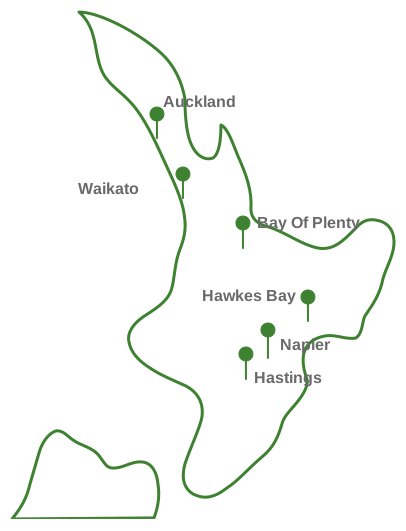
Enviro Clean & Restoration locations: Auckland, Waikato, Bay of Plenty, Hawkes Bay, Napier and Hastings

Every enquiry is completely confidential. Assessments and quotes are always free — no call-out fee, no obligation.