24/7 Emergency Response·Nationwide · average 2-hour response in main centres0800 222 379
Call 0800 222 379 — 24/7
Enviro Clean & RestorationGet In Touch
Resources

Carpet Care Tips

With proper regular care, you can add years of life to your carpet and help it retain its original appearance.

A word about do-it-yourself cleaning

Professional cleaning is recommended for any carpet, especially stain-resistant carpet. However, if you decide to do it yourself, carefully follow the manufacturer's instructions and use the correct products for the job.

No matter how careful you are, accidents are going to happen to your floor covering. When these minor accidents do occur, quick action is most important. The use of the right products, or a combination of several, will remove many different kinds of spots.

The most important single factor in successful spot removal is to work on the spot while it is still fresh. Often our cleaning professionals have difficulty only because the spot has dried into the carpet and has set or dyed the carpet fibres.

Because the use of products is beyond our control, ENVIRO cannot be responsible for changes in the colour or texture of the fabric, or for any resulting damage.

Carpet installation

Proper installation is critical to beautiful appearance and carpet performance. A quality installer will follow these guidelines.

  • Measure the metres needed for each room area.
  • Inspect the actual carpet prior to installation for any defects.
  • For patterned carpet, consider proper matching of the design. In cut-pile carpets, make sure the pile direction is the same between the two seamed pieces.
  • Determine the position of seams and how the edges will be finished in doorways.
  • Make certain the seams are strong enough to withstand stretching and traffic, and yet as inconspicuous as possible.
  • Stretch the carpet properly during installation to avoid wrinkles or buckles caused by traffic, humidity and temperature.
  • Call your local ENVIRO professional for all types of carpet repairs.

Common carpet characteristics

Pilling

After carpeting has been subjected to foot traffic, moving of furniture, vacuuming and other forms of mechanical agitation, fuzzing — the working out of loose fibre ends in the pile — can be observed. When an entire fibre is removed, it is called shedding or fluffing. In some cases only one end of the fibre is worked out; in others it is tightly twisted or entangled in the tuft. When this happens in local areas, the long fibres become entangled and form a pill.

Pilling is common, and is not a problem when the pills break or are pulled out by the vacuum as they form. However, a strong elastic fibre such as nylon will resist this breaking. This results in small spider-like pills over the entire surface of the carpet, perhaps more concentrated in the areas of greatest traffic.

These pills can generally be removed by lifting the main ball portion with thumb and forefinger and using scissors to cut the fibre that holds the pill onto the carpet. Take care not to pull any excess fibre from the carpet, which may damage the pile when cutting.

Ripples

Carpeting, like most other textiles, is made under tension. Tension is necessary so that the loom or machine will function properly, producing fabric uniform from one portion to the next. Yet carpeting differs from many textiles in that the back may be composed of several layers, which are not generally pre-shrunk. Moisture, which produces swelling, may result from humidity, spills or improper cleaning methods.

If two adjacent areas are not manufactured under the same identical tension, unevenness or rippling will develop. This will also happen if the tension of the second back is not uniform with the primary rug backing. Ripples can also be caused by dragging heavy furniture across the rug — across its entire width, from the edge to the middle, in the middle only, along the edges, or in one small section.

Shading

Apparent colour difference between areas of the same carpet, caused by normal wear and the resulting random difference in pile lay direction, is referred to as shading.

It is a characteristic of all cut-pile carpet. It is not a manufacturing defect. The physical cause is the difference between cut end lustre and side lustre of fibres. The sides of fibres reflect more light and appear brighter and lighter in colour than the ends, which absorb more light and appear duller and darker.

Little can be done to prevent or correct shading; it is an inherent characteristic of certain types of carpet. It can be slowed by vacuuming or brushing the pile in one direction during daily or weekly maintenance.

Static

Do you snap, crackle and pop after walking across your carpet? This is static formed by the friction of your shoes against fibres in the carpet. Usually there is enough moisture or humidity in the air to carry off the static charge as it is formed — but when the weather turns dry and the humidity is low, watch out.

The tendency to generate a static charge at low humidity varies from carpet to carpet. Some of the newer carpets have anti-static agents built into the fibre. Others use very fine metal wires, or even conductive latex within the carpet, to carry off the static. Anti-static protection of this type usually lasts for the life of the carpet.

If your carpet has none of these innovations and bites back in dry weather, it may still be possible to obtain some relief through increasing the humidity, or by use of an anti-static agent sprayed on the face of the carpet. ENVIRO can apply an anti-static agent to your carpet that will last for many months.

Sunlight damage

Almost every carpet will lighten in colour or fade over a period of time. The extent of damage depends on the location, exposure, colour, the intensity and type of dye, and the method of dyeing. A carpet that has been solution-dyed — dyed during the synthetic production process — is least susceptible to sun fading. The pigments are added to the polymer before the fibres are formed, locking in the colour. Most polypropylene (olefin), many acrylics and some polyester carpets are dyed by this method.

Lighter shades will usually fade more quickly than darker shades because they contain less dye. Most dyes are composed of two or more colours. If one colour is affected more than the others, the fading may appear as a colour change rather than a lightening. For example, a green carpet yarn is made from blue and yellow dyes; if the yellow dye is affected and the blue is not, the green carpet may seem to turn bluer. In other cases the colours may fade uniformly, appearing as a lighter shade of the original. In severe cases the colour may be removed completely and can appear bleached white. The fibre itself can also deteriorate.

You may be able to prevent carpets from fading in sunny locations by keeping the windows covered with draperies, or by treating the windows with a protective coating that filters the ultraviolet rays. If you live in an area where sunlight fading is a problem, shop carefully for your next carpet purchase.

Spot and stain removal

There are hundreds of home remedies. Some will do a fair job; others may set the spot. By calling an ENVIRO professional, you will not be gambling with the look of your furnishings.

The right stain removal techniques

Stains can make a carpet appear more soiled than it really is, so no carpet cleaning method is complete unless all removable stains have disappeared. A basic knowledge of different stains and of the chemicals for spot cleaning is vital, since improper or indiscriminate use of spotting chemicals can worsen a problem.

Helpful tips on spot cleaning

  • Always blot or scrape up as much material as possible before it soaks into the carpet.
  • For blotting liquids, use white paper towels or tissues. A cloth will work but is less desirable: if used too long, the matter soaked into the cloth will redeposit into the fibres and spread the stain.
  • For scraping solid matter, use a table knife. Never use a sharp instrument.
  • Never use soap. It frequently leaves a sticky residue that causes rapid resoiling.
  • Do not allow solvent-based products to penetrate to the backing. They may damage and soften the latex compounds used to strengthen it.

Follow the five steps

  • Scoop up solids before cleaning.
  • Blot as much liquid as possible using clean white towelling or paper towel.
  • Clean: apply the spot removal agent to a clean towel. Do not apply it directly to the carpet.
  • Rinse with cold or lukewarm water only, and do not saturate.
  • Blot dry with absorbent material such as paper towelling, or use a cold air fan to complete drying.

Rubbing or scrubbing will cause permanent pile distortion.

Carpet maintenance

There is a difference in cleaning methods. Most major carpet manufacturers recommend the hot water extraction method to maintain your warranty and extend the life of your carpeting.

ENVIRO's cleaning equipment uses hot water soil extraction to clean your carpet and furniture without harsh chemicals. We also offer dry powder cleaning methods when required.

ENVIRO uses superheated water and an emulsifier to remove dirt and debris at the molecular level. Our equipment delivers the superheated water to your carpeting as hot as when it leaves the unit. Our powerful truck-mounted vacuums then extract the dirt and water, leaving your carpet clean and decontaminated and enabling it to dry very fast. Your carpet is clean all the way to the base of the fibre.

Other methods, using mechanical scrubbing action, shampoo or dry carbonated chemicals, may leave problems and dirt behind. A rotary brush can cause pile distortion, leave a sticky residue that makes your carpet resoil rapidly, and remove only the surface dirt while the rest is pushed deeper into the carpet. Your carpet is not sanitised by these methods.

Animal stains

Cats may be considered one of the cleanest animals, and dogs may be man's best friend, but neither is necessarily a friend to the carpet. Neglected animal stains have always been a problem.

Two types of reaction can take place between the chemicals in the urine and those in the fibre dye. Some dyes change colour as soon as urine comes into contact with them. Often the original colour can be restored by the immediate addition of a weak solution of ammonia or white vinegar. Pick an inconspicuous area of the carpet and test small amounts of the solution to determine its effect on the fibre and dye.

The other change develops slowly over a period of several months and results in a permanent change of fibre dye. Along with the dye change, some fibres become weakened or destroyed. After cleaning, these areas are more obvious because the soil that hid the true colour has been removed.

The next time you are confronted with an animal accident, immediately absorb as much liquid as possible. Wash the area with a solution of one teaspoon of neutral detergent, containing no bleach, to one cup of lukewarm water. Absorb into white tissues or towelling. Add a white vinegar solution of one part white vinegar to two parts water. Absorb as dry as possible. Place a half-inch layer of white absorbent material over the area and weight it down. Allow about six hours to dry.

If immediate action is taken to remove the stain in this manner, no change in colour should occur, and that forgotten accident will not become apparent after your carpet has been professionally cleaned.

The forgotten spill

Sometimes stains that have been hidden by soil are revealed after cleaning. These stains, which did not immediately cause discolouration, are usually from spilled liquids containing colourless sugar that remained on the fibres. After long exposure to the air they changed to insoluble brown stains, but would not be noticed because of the dirt covering them.

Other kinds of stains can be caused by water soaking through and absorbing sizing, browning or fugitive dyes from the backs of the material. Because the fibres act as wicks, moisture will rise to the surface and evaporate, and discolouration will be left. Carpet owners who try to remove stains using the wrong cleaning compounds and procedures may only make the stained areas more noticeable.

Frequently asked carpet questions

What type of cleaning method do we use?

ENVIRO uses a steam cleaning method, also known as hot water extraction, to clean your carpet. The first part of this method consists of using a gentle detergent mixed with hot water to precondition your carpet. The second part is a hot water extraction, which frees the carpet of soil all the way down to the bottom of the fibres and removes all the detergent. This is the method recommended by the major carpet manufacturers, such as Feltex, Cavalier Bremworth, Godfrey Hirst and Shaw.

Will wet cleaning my carpet attract soil faster?

No. When you rinse the carpet with hot water after preconditioning, it removes the residue that would attract soil.

Doesn't wet cleaning remove the natural oils from wool carpet?

No. Wool carpet, when manufactured, undergoes a process to remove the natural oils from the fibre.

How long do I have to stay off the carpet after it is cleaned?

It is best to stay off the carpet as much as possible until it is dry, especially for the first four hours. If you must walk on it, wear clean-soled slippers or house shoes. This helps prevent crushing of the pile and re-soiling.

What about dry carpet cleaning methods, such as bonnet cleaning — are they better?

Dry cleaning methods are known as appearance retention methods of carpet cleaning, as per the IICRC carpet cleaning training manual. They are used in the cleaning of commercial carpets, where the carpet is cleaned on a scheduled basis, and typically in conjunction with hot water extraction as part of a programme.

No carpet cleaning method is completely dry; all use some form of moisture. In a residential situation, dry methods leave the carpet drier when finished but do not have the ability to remove as much contamination and soiling, on a percentage basis, as hot water extraction. The reason is that hot water extraction uses a rinsing process, similar to applying shampoo to your hair and rinsing it out. Dry cleaning methods do not.

How can I keep my carpet looking new as long as possible?

The best thing you can do for your carpet is to vacuum it regularly, have walk-off mats at each entrance, and have it cleaned with a hot water extraction method at least once a year.

What are the benefits of applying a fabric protector?

It helps the carpet resist soil, spills clean up more easily, and it helps your carpet, rugs and furniture look cleaner for longer, even after heavy use.

Will your cleaning method cause mould, or leave the carpets wet and soggy?

No. Steam extraction performed by trained technicians with quality equipment is the most effective and efficient method of cleaning carpet. This method is the most common used by professionals throughout the world, and is recommended by carpet manufacturers and retailers as their preferred method. No other method can remove more contaminants from your carpet while leaving minimal residue.

Do you guarantee your workmanship?

Yes. We guarantee that all work is performed to industry acceptable practices. Please be aware that pre-existing damage can at times be permanent and impossible to remove. This may include pot plant stains, pet urine and drink spills. Our technicians will take all practicable steps to remedy the situation.

Your company is one of many — why should I choose you?

ENVIRO continues to lead the industry on several fronts. Firstly, all our technicians are IICRC qualified in many areas, including carpet and upholstery cleaning, odour control, water and fire damage restoration, carpet repair and colour repair. This means the technician performing the work, not just the company owner, is qualified by an international certification body. The next time you have your carpet or upholstery cleaned, ask to see their qualification card.

Secondly, all technicians have leading-edge truck-mounted equipment. The benefits are hot water, faster drying, less chemical usage, no portable equipment inside, all contaminants kept in the waste tank outside, and no use of your electricity.

Finally, we are certified and founding members of the Carpet Cleaners Association of New Zealand (CCANZ); one of the directors of ENVIRO was the association's first president. This association is the trade body representing all carpet and upholstery cleaners in the country. To become a certified member, a company must comply with a code of practice, undergo regular training, hold public liability insurance and comply with a strict complaints procedure.

Where can I get some independent advice?

If you are thinking about requesting the services of a carpet cleaning company, contact the CCANZ office on 0800 422 269 and find out whether they are a member. It is your guarantee that the job will be performed correctly. You may also want to visit the Wools of New Zealand website at woolsnz.com for helpful information.

How often you will need professional cleaning depends on soil build-up, traffic, and the type and colour of your carpeting. A good rule of thumb is to have your carpet professionally cleaned every 12 months.

In their words

The people we've helped say it better than we can

I wish to compliment very highly the staff member who came and cleaned my carpet. He was early, polite, efficient, very helpful and completed a wonderful job for me. Such good service should not be unrecognised
Nola J, Auckland
The Kidney Society would like to thank your company and your carpet technician for cleaning and re-stretching our carpet. It has come up fantastic and we are really pleased and very grateful. Thanks again for the work that was done it is really appreciated.
Lynda K, Auckland
Questions, answered honestly

Frequently asked questions

Does insurance cover this kind of clean-up?

Usually, yes. Most home, contents, landlord and commercial policies cover biohazard remediation, water damage and contamination clean-up, though meth cover varies by policy. We check this with you on the first call, document everything to insurer standard and deal with your insurer directly. Where the policy allows, we invoice them — not you.

What is Category 3 water?

Category 3 — often called black water — is water that is grossly contaminated: sewage, backflow from drains, floodwater that has crossed ground or farmland. It carries bacteria, viruses and parasites, so anything porous it touches usually can't just be dried; it has to be removed or properly decontaminated. That's why Category 3 jobs need specialists rather than a general cleaner.

How long does meth decontamination take?

A typical three-bedroom house takes one to two weeks from decontamination to clearance, depending on contamination levels and how many surfaces are affected. Screening results come back within about 48 hours, and we quote from those. Heavily contaminated properties or former lab sites take longer. We give you a written timeline up front and keep you updated throughout.

Is my property definitely safe afterwards?

Yes — and we prove it rather than ask you to take our word. Meth jobs finish with independent clearance testing against the NZS 8510 standard. Trauma and sewage jobs finish with verified surface testing and a written clearance report. If any reading isn't where it should be, we re-treat at our cost until it is. You receive the documentation to keep.

Will the neighbours know you've been?

No. We arrive in plain workwear, and our team never discusses a job with anyone but you. Discretion isn't an optional extra for this work — it's the foundation of it. If you have specific concerns, such as shared driveways or a body corporate, tell us and we'll plan around them.

What happens to contaminated items?

Anything that can't be safely decontaminated is removed, packaged and disposed of as controlled waste, with a disposal record for your insurer. But we treat that as a last resort — sentimental items in particular. Tell us what matters to you, and we'll do everything possible to save it. Nothing leaves the property without your sign-off.

How quickly can you get here?

For emergencies — trauma scenes, sewage, active water damage — our average response is around two hours in main centres, and we cover the whole country. The phone is answered 24/7 by our own staff, not an answering service, and we'll give you an honest arrival time on that first call. Non-urgent assessments are usually booked within a day or two.

Can I stay in the property while you work?

Often, yes. We contain the affected area with sealed barriers and filtered air so the rest of the home stays safe to live in. For whole-house meth decontamination or major sewage events you may need to stay elsewhere for a period — if so, we'll tell you straight away, and temporary accommodation is often claimable under your policy.

How much does it cost?

Every job is different, so we won't quote blind — but the assessment and quote are free, in writing, and fixed before work starts. Where insurance applies, which is most of the time, your real cost is often just the excess. There are no call-out fees for quotes and no charge for talking a situation through on the phone.

Do you provide a clearance certificate?

Yes — every job ends with written clearance documentation. For meth that means an independent NZS 8510 clearance report; for water and trauma work, a completion report with photos, readings and disposal records. It's the paperwork landlords need for tenancy files, agents need for sales, and insurers need to close the claim.

Qualified and accredited

Contact us

We're here whenever you need us

24/7 emergency line
0800 222 379
Hours
24 hours, 7 days — including public holidays
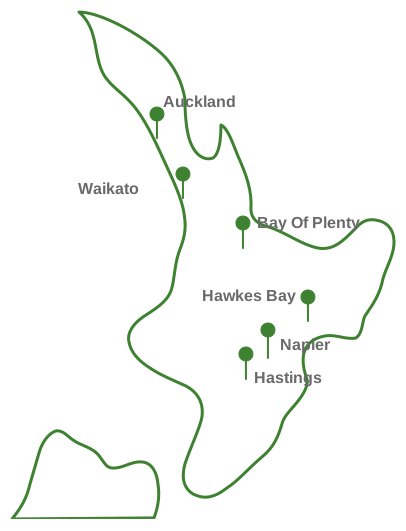
Enviro Clean & Restoration locations: Auckland, Waikato, Bay of Plenty, Hawkes Bay, Napier and Hastings

Every enquiry is completely confidential. Assessments and quotes are always free — no call-out fee, no obligation.